
Written by Christos Ioannou, Commercial Director, EnergyIntel
Quick Overview
- Solar panels work best architecturally when considered from the first sketch, not added after the building’s form, roofscape and facades are fixed.
- Visible photovoltaics do not inherently compromise design; poor integration is usually the result of introducing them too late.
- Solar technology can actively shape structural grids, facade rhythms, rooflines, shading, entrances and other architectural elements.
- Successful integration does not require invisibility. It requires photovoltaic surfaces to feel deliberate, disciplined and connected to the overall composition.
- Architects, engineers and energy specialists must collaborate early if renewable energy is to become a genuine design material rather than an afterthought.
For years, solar panels have been treated as equipment to be tolerated rather than architecture to be designed. Hidden behind parapets. Pushed to the least visible part of the roof. Kept away from the principal elevation.
This is rarely a deliberate wish to conceal. More often it is a consequence of sequence. By the time photovoltaics are properly considered, the form, roofscape and facades have already been fixed, and the panels can only be added around what is already decided.
That is the question worth putting to the profession. Not whether solar should be visible or hidden, but whether it is designed in from the first sketch or added on at the end.
Buildings have never concealed everything that makes them work. Structure has become expression. Staircases have become landmarks. Ventilation towers, exposed services and brise-soleil have all shaped architectural identity. Yet photovoltaic panels are still routinely treated as a technical intrusion.
Why should the technology that powers a building be something the architecture must apologise for?
The problem is not that solar panels are visible. The problem is that they usually enter the conversation too late.
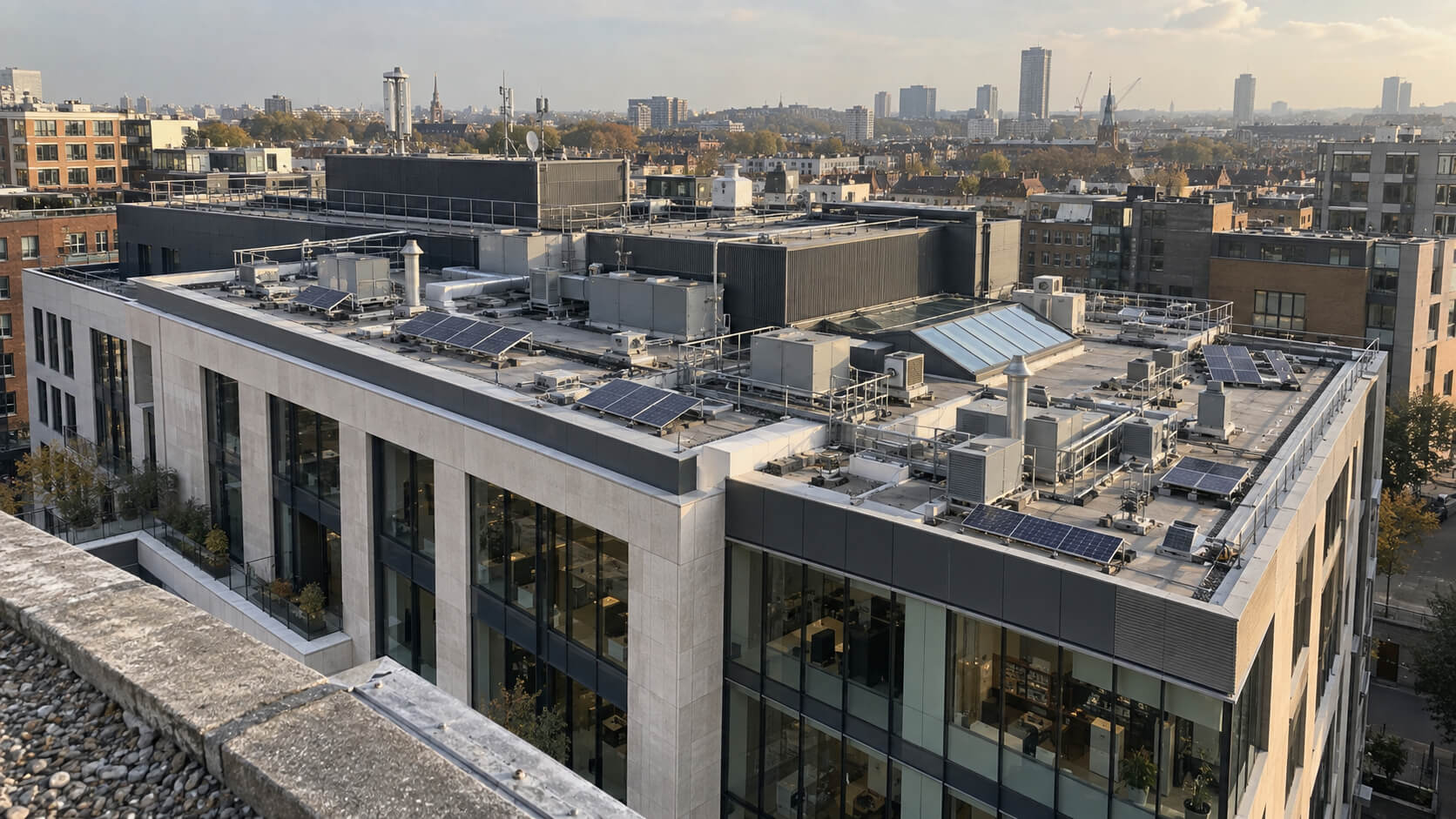
When photovoltaics arrive after the form and facades are fixed, they inevitably look added. Installers are left to position standard modules around plant rooms, skylights, parapets and competing equipment, and the result is driven by whatever space remains. The disorder that follows is then read as evidence that solar compromises design. In reality, it is the sequence that compromised the solar, not the technology that compromised the architecture.
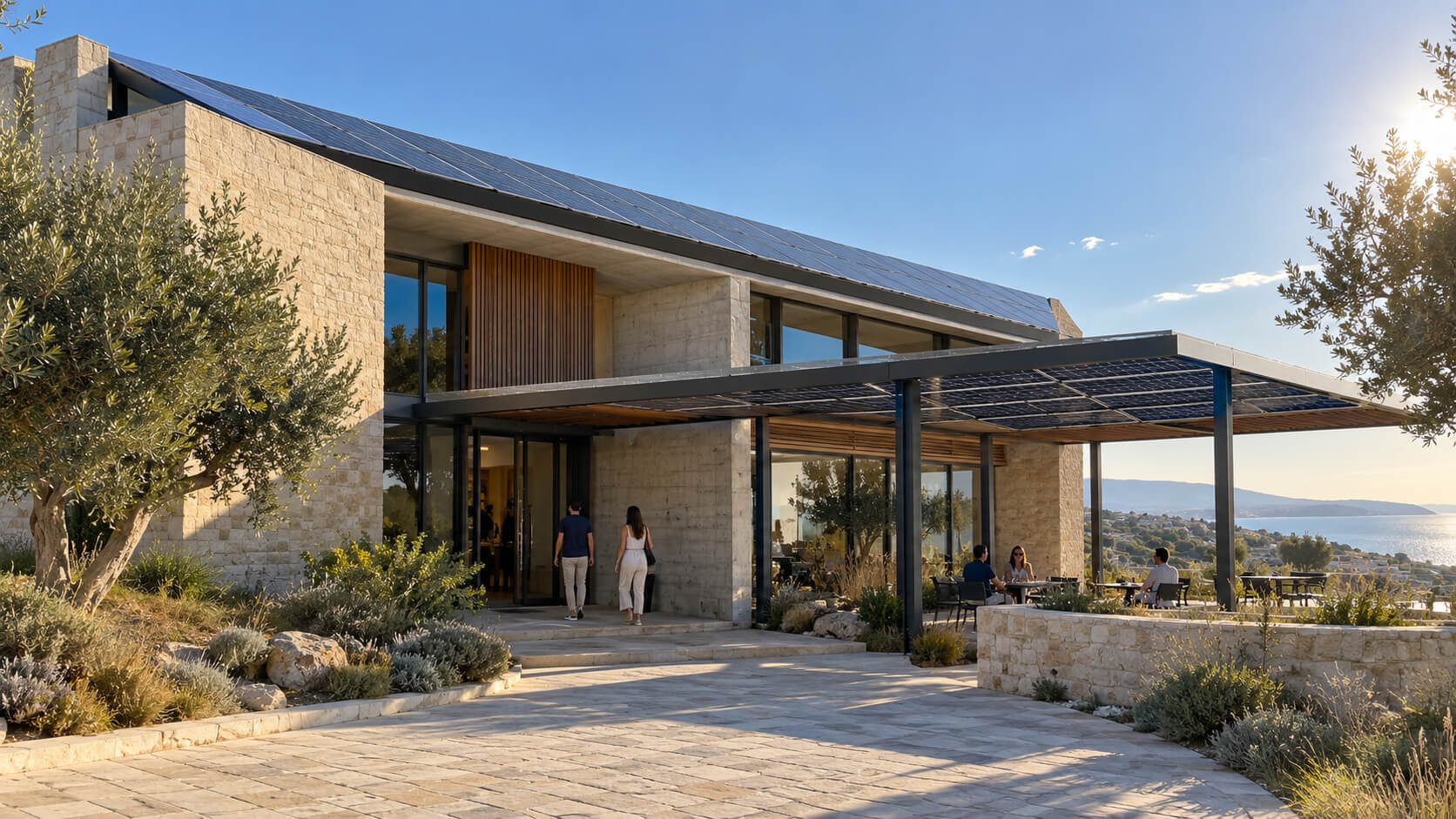
If energy generation were considered from the first sketch, the outcome could be entirely different. The dimensions of photovoltaic modules could inform structural grids. Their alignment could continue the rhythm of a facade. Their angle could define a roofline. Their repetition could create depth, shadow and proportion. Solar canopies could form entrances, verandas, walkways and parking structures. Photovoltaic surfaces could become part of the composition rather than an apology placed above it.
This does not mean every building should advertise its technology, nor that every available surface should be covered without judgement. It means that concealment is not the only route to elegance.
Integration is not the same as invisibility.
A well-designed photovoltaic surface can be quiet, disciplined and deliberate. It can sit confidently beside stone, concrete, timber and glass. It can provide contrast or continuity. It can be expressed as a precise technological layer or absorbed into the geometry of the building. What matters is not whether we see it, but whether it belongs.
This question is particularly relevant in Cyprus. Here, sunlight is not an abstract sustainability concept. It is one of the most powerful forces shaping daily life and architectural experience. It creates heat, glare, shadow and extraordinary opportunities for energy generation. Yet many contemporary buildings still respond to it defensively, through heavier cooling systems, reflective glazing and technical additions, rather than allowing it to influence their fundamental design.
We celebrate uninterrupted views and expansive glass, but conceal the surfaces that could help power the spaces behind them. That is not architectural purity. It is a contradiction worth resolving.
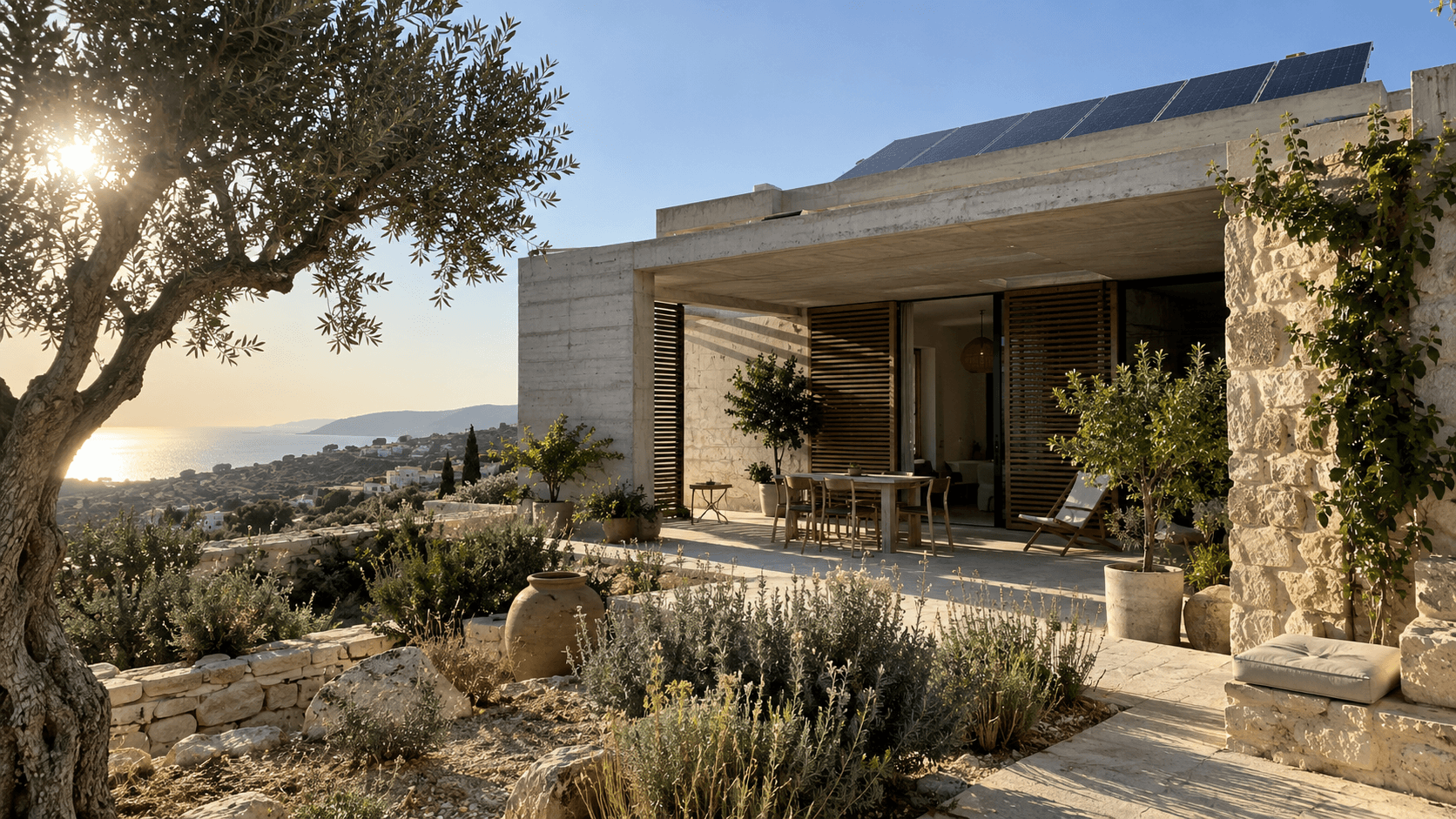
Resolving it asks architects, engineers and energy specialists to collaborate before the architecture becomes untouchable. It asks for energy yield to be considered alongside proportion, materiality and spatial experience, not after them. Above all, it invites architects to see photovoltaics not as prescribed equipment, but as a new design material with its own scale, rhythm, reflectivity and potential.
Every generation of architecture has been shaped by the technologies that defined its time. Steel changed spans. Elevators changed skylines. Glass changed facades. Artificial lighting changed interiors.
Renewable energy will shape architecture too. The question is whether architects lead that transformation or continue to inherit it after the important decisions have been made.
Solar panels should not apologise for being visible.
But every design should be able to answer one question: was the energy designed in, or added on afterwards?