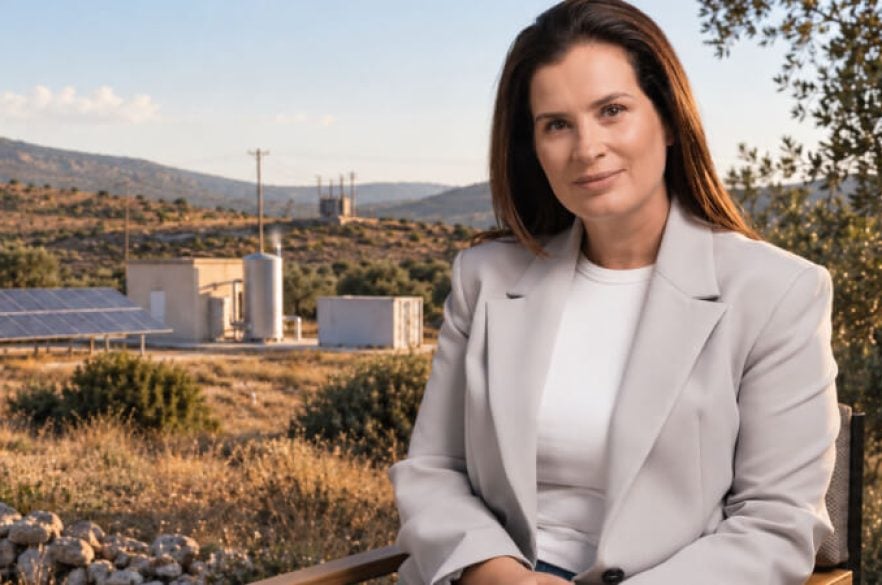

Written by Efi Philippou,CFO, EnergyIntel

Quick Overview
- Energy is a material financial risk, affecting operating costs, margins, cash flow, business continuity and asset value.
- The CFO should be involved from the beginning, not brought in only when the budget needs final approval.
- Investment decisions must reflect the company’s actual load profile, tariff exposure and operational needs, rather than annual consumption alone.
- Financial analysis should test multiple scenarios, including changing tariffs, consumption, financing costs, downtime and the cost of delaying action.
- Performance must be monitored after implementation by comparing actual energy production, consumption, savings and cash impact with the original business case.
For many companies, energy is one of the most material operating costs.
It feeds directly into the cost of production, the price of the end product, gross margins and cash flow. When energy costs rise, the business must absorb the increase, pass it to customers or change how it operates. None of these choices is without consequence.
Recent geopolitical developments have also reminded us that energy prices and supply can change for reasons entirely outside a company’s control. The ECB has highlighted how energy supply disruptions can place further pressure on prices, inflation, growth and financing conditions across the euro area. European Central Bank, Financial Stability Review, May 2026
Energy, therefore, cannot be treated lightly or reviewed only after the electricity bill arrives.
It needs to form part of the company’s CAPEX priorities.
That does not mean every energy investment should be approved. It means the cost of taking action should be compared with the cost and risk of doing nothing.
Yet financial leadership is often involved only at the final stage, when the solution has already been designed and the CFO is asked to approve the budget.
That needs to change.
Energy affects operating costs, liquidity, capital planning, business continuity and asset value. It deserves the same financial scrutiny as every other strategic investment, with the CFO involved from the beginning.

Our first question should not be, “How much will the system cost?”
It should be:
What is our load profile?
An annual electricity bill is not enough. We need to understand when energy is consumed, where demand peaks occur and which activities are creating them.
Two businesses with the same annual consumption can require completely different solutions.
Before deciding on system size or technology, consumption data should be mapped against working hours, production cycles and seasonal changes. The investment should be designed around how the business actually operates, not around an annual average.
How exposed are we to tariff changes?
Energy is not a fixed cost. It is a variable risk that can move independently of revenue and place immediate pressure on margins.
Management should be able to see how different tariff scenarios would affect gross profit, cash flow and pricing decisions.
The objective is not to predict the exact future price. It is to understand how much exposure the company can absorb and at what point action becomes necessary.
What is the payback under different scenarios?

A single payback period is only as reliable as the assumptions behind it.
What happens if tariffs rise, consumption changes or financing costs increase? What if the company expands its premises, introduces new equipment or changes its operating hours?
We do not approve major investments because they perform well in one scenario. Energy should be no different. We need to understand the upside, the downside and the conditions under which the investment creates, or loses, value.
What energy are we producing but not using?
Installing photovoltaic capacity does not automatically mean the company has optimised its energy position.
If generation occurs when demand is low, the business may export energy under less favourable terms while continuing to purchase electricity during more expensive periods.
The focus should not be on producing the largest possible amount of energy. It should be on creating the greatest economic value from every unit produced.
That may require better energy management, load shifting, storage or a more integrated approach. A system can perform exactly as designed from a technical perspective and still underperform financially.
What does downtime cost us?
The cost of downtime extends far beyond lost electricity.
It may include interrupted production, idle employees, delayed orders, damaged materials, contractual penalties and customer dissatisfaction.
Finance and operations should calculate the cost of an interruption in practical terms. If we do not assign a financial value to continuity, we are assessing the cost of the equipment while ignoring the wider business risk.
What will it cost us to delay the investment by 12 months?

Waiting may feel financially prudent, but delay is not free.
It can mean another year of avoidable energy costs, continued exposure to price volatility, lost energy production and potentially higher equipment, construction and financing costs.
Delay may still be the right decision, but it should be measured. Every proposal should show management both the cash required to proceed and the cost of maintaining the current position for another year.
As CFOs, we should not approve energy investments simply because they appear modern, sustainable or inevitable.
Before approval, the company should agree on the consumption baseline, the assumptions supporting the investment, the expected financial return and the person accountable for delivering it.
The work should also continue after implementation.
Actual consumption, production, savings and cash impact should be compared with the original business case. If the expected benefit does not appear in management reporting, we need to understand why.
Engineers can determine whether the system will work. Operations can explain how the business consumes energy. Sustainability teams can assess its environmental contribution.
The CFO connects those elements to capital, margins, cash flow, return and risk.
That is why the CFO should not merely be invited to approve the energy budget.
We should be in the meeting from the beginning, helping the company select the right investment, at the right scale and at the right time.