
Written by Michalis Pantelides, Electrical Technician, EnergyIntel
Quick Overview
- The energy profile of the home is changing as modern lifestyles become more electrified, more demanding and increasingly continuous.
- Air conditioning, swimming pools and electric vehicles are the three loads making the greatest difference. They are not simply added comforts; they are major drivers of household energy consumption.
- The question is not only how much energy a home consumes, but when and why it consumes it—and whether that energy can be used more intelligently.
- Solar photovoltaic systems deliver greater value when they are designed around a home’s actual loads, aligning generation with cooling, pool operation and potential EV charging.
- The home of tomorrow will be defined by control: not only by how much energy it produces, but by how effectively it uses and manages that energy while adapting to the family’s changing needs.
For many years, the conversation around household energy consumption was relatively straightforward.
Lighting, appliances, hot water, air conditioning and the monthly electricity bill.
Today, however, the picture is changing and changing rapidly.
A modern home does not consume energy simply because it is occupied and operational. Its energy needs are growing because life within it is becoming more demanding, more electrified and increasingly continuous.
The conversation, therefore, can no longer be limited to whether a home needs solar panels. The more important question is this: what is truly changing the home’s energy profile?
In many households, three factors are making the greatest difference: air conditioning, the swimming pool and the electric vehicle.
These are not merely additional comforts. They are significant loads that can completely reshape a household’s energy profile.
Today, most newly built homes already include (or are expected to include) at least one of these three loads. That is why energy planning can no longer be based on yesterday’s needs.
1. Air Conditioning: A Need That Is No Longer Seasonal
In Cyprus, air conditioning is not a luxury. It is an essential part of everyday comfort, particularly during the summer months.
The issue is that cooling does not only affect the total electricity bill. It also determines when energy is consumed.
A home operating air-conditioning units in several rooms for many hours each day has an entirely different energy profile from one where cooling is used sparingly. If, for example, three air-conditioning units each draw an average of 1.5 kW and operate for six hours a day, the calculation is approximately:
3 units × 1.5 kW × 6 hours = 27 kWh per day
During a month of intensive use, air conditioning alone can consume more than 800 kWh before any of the home’s other energy needs are taken into account.
The critical point is that part of this demand occurs during the hours when a solar photovoltaic system is generating electricity. For a home with significant daytime cooling needs, solar generation can therefore deliver substantial practical value, provided the system has been designed correctly.
2. The Swimming Pool: The Load Working in the Background
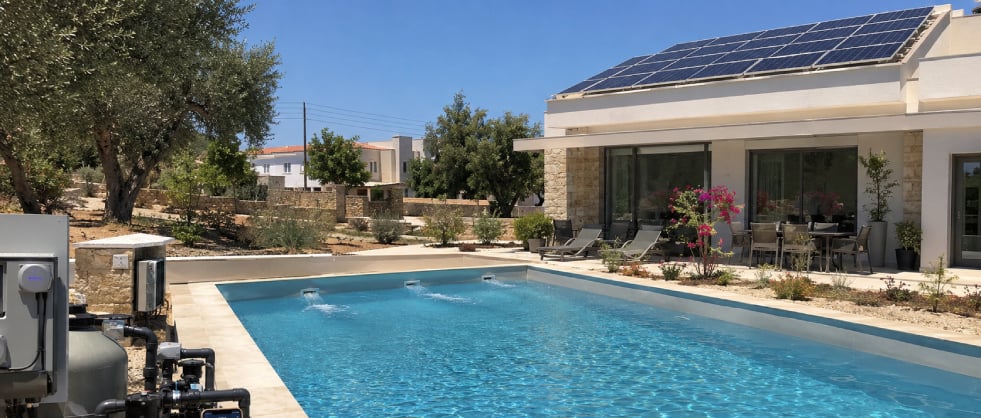
A swimming pool is one of the clearest examples of an energy load that many homeowners underestimate.
It is not only about the water. There is the pump, water circulation and filtration. Depending on the installation, there may also be lighting, automated systems or heating.
The important point is that a pool’s electricity consumption is often consistent and recurring.
If the pump is oversized, outdated or runs for longer than necessary, its consumption can rise considerably. Because pool systems often operate automatically, with little day-to-day attention, that consumption can easily go unnoticed.
This is where an effective energy strategy delivers practical value.
In many cases, pool operation is a flexible load that can be scheduled. Part of its operation can be shifted to the hours when solar energy is being generated. If the home has solar panels, running the pool pump during generation hours can increase self-consumption and reduce the amount of electricity drawn from the grid.
The technology does not need to be complicated. It simply needs to be properly coordinated.
A home that understands when it produces energy and when it consumes it can manage flexible loads such as a swimming pool more intelligently. This does not necessarily mean consuming less energy in absolute terms. It means consuming it more effectively.
And that is an important distinction.
3. The Electric Vehicle: When Mobility Becomes Part of the Household Electricity Bill
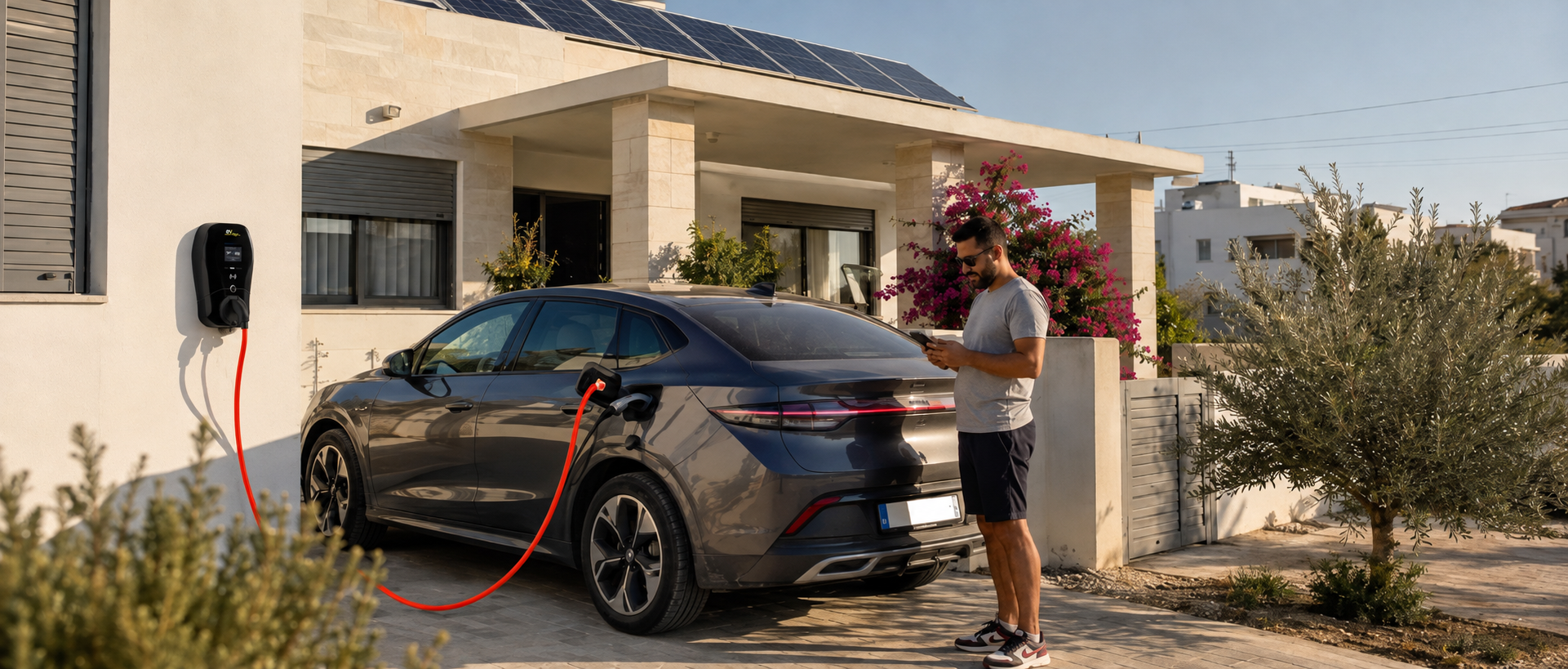
The electric vehicle fundamentally changes the home’s energy equation because it transfers part of the cost of mobility from the fuel station to the household electricity meter.
This is not a disadvantage. On the contrary, it represents a significant opportunity.
But it must be planned correctly.
An electric vehicle requiring 40 kWh for a substantial charge can consume, in a single night, as much energy as many household appliances would use over several days. If charging is unmanaged and takes place when the home is already experiencing high demand, it can place additional pressure on the household’s electrical system.
The question is not simply whether the home can charge the vehicle.
The real question is how it will charge it.
- Will charging take place overnight?
- Can daytime solar generation be used?
- Is a smart charger required?
- Does the home have a battery storage system?
- Can charging be scheduled around the family’s needs?
- Has provision been made for a second electric vehicle in the future?
A smart energy system can schedule vehicle charging when surplus solar generation is available or when the home’s overall electricity demand is low.
An electric vehicle should not be treated as though it were simply another appliance plugged into the wall. It is one of the largest new electrical loads a household can introduce.
That is why it requires proper energy planning.
Effective thermal insulation, shading and energy-efficient equipment remain essential components of an integrated home energy strategy. Solar panels and smart technologies perform best when they are built on these foundations.
From Consumption to Control
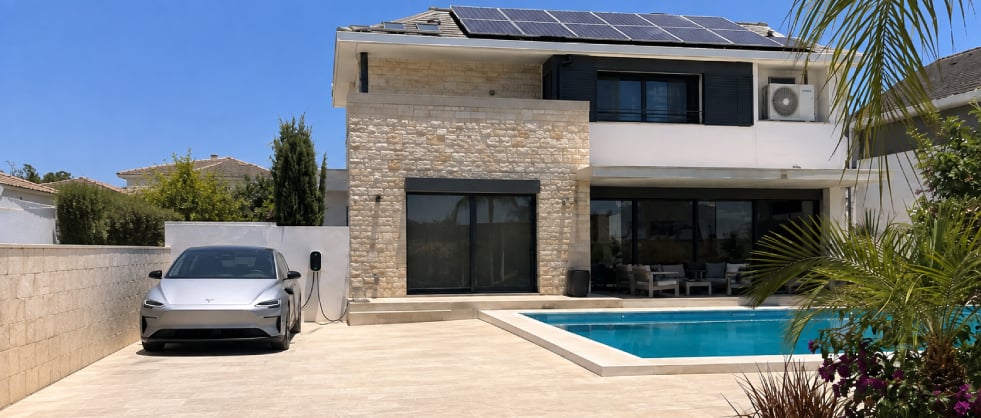
The home’s new energy reality is not only about reducing the electricity bill. It is about gaining control.
The objective is not necessarily to consume less energy, but to use it at the right time and in the most efficient way possible.
Control over when energy is consumed.
Control over how much energy is generated and used on-site.
Control over how the electric vehicle is charged.
Control over whether the pool and air-conditioning systems are operating as efficiently as possible.
Control over how the home can adapt to the family’s needs in the years ahead.
In Cyprus, where cooling, outdoor living and, increasingly, electric mobility play a growing role in everyday life, these three loads are not minor details.
They are the foundation on which the energy strategy of a modern home should be built.
Because the home of tomorrow will not be judged only by how much energy it can produce.
It will be judged by how intelligently it can use it.
There is no single solution that works for every household. The right energy strategy begins with understanding each family’s lifestyle and actual needs.
Understand the loads that are reshaping your home’s energy profile. Talk to EnergyIntel and design a solution around the way you truly live.