
Written by Christos Ioannou, Commercial Director, EnergyIntel
Quick overview
- Summer reveals a business’s real energy performance, especially when cooling, refrigeration and operational loads peak.
- A monthly electricity bill is not enough. Businesses need to understand when energy is consumed, what drives demand and where waste happens.
- PV should be designed around the business load, not just the roof size. The real value comes from using more energy at the right time.
- Storage and monitoring turn energy into a managed system, helping reduce grid dependence, improve self-consumption and support smarter decisions.
- • The businesses that lead will be those that use data to build resilience, not just those that install more equipment.
Every summer, Cyprus becomes a live stress test for business energy systems.
Temperatures rise. Air conditioning runs for longer hours. Refrigeration loads become more critical. Hotels operate closer to full intensity. Clinics depend on stable indoor conditions and uninterrupted equipment. Supermarkets protect stock around the clock. Offices, factories and commercial buildings carry higher cooling, lighting, machinery and operational loads at the same time.
The result is not simply a higher electricity bill.
It is a clearer picture of how well – or how poorly – a business is managing one of its most important operating systems.
In July 2025, electricity demand in Cyprus reportedly reached 1,046 MW at midday, the highest level of that year at the time, as air conditioning and appliances pushed consumption above recent July levels. More recent reporting also shows how exposed Cyprus is to cooling demand, with cooling degree days recorded at around 610% of the European average, according to a European Commission Joint Research Centre report referenced by Cyprus Mail.
For businesses, these numbers are not abstract.
They describe the operating environment.
Businesses in Cyprus operate in a market where cooling is no longer seasonal but a structural load.
And that changes the way energy strategy should be designed.
The mistake many businesses make is that they evaluate energy only through the monthly bill. But the bill is late information. It tells you what has already happened. It does not show when the business peaked, which systems caused the increase, whether the photovoltaic system covered the right loads, whether storage could have reduced grid dependence, or whether equipment was operating inefficiently during the most expensive hours of the day.
Many buildings appear efficient during spring and autumn.
Summer is when their true energy performance is revealed.
That is why summer does not create energy problems.
It reveals them.
The first thing summer reveals is the real load profile
For a business, the most important energy question is not only:
“How many kilowatt-hours do we consume?”
The better question is:
“When do we consume them, and why?”
Two businesses may consume the same amount of electricity each month, but very differently. One may have a stable daytime load, while another experiences sharp peaks or significant night-time demand.
This matters because energy technologies perform differently depending on the load profile.
A photovoltaic system produces most of its energy during the day. If a business has strong daytime consumption — for example cooling, refrigeration, kitchens, offices, machinery or pumps — PV can directly offset grid electricity when the business is actually operating. If, however, production exceeds the business’s immediate demand, the value of that energy depends on whether it can be stored, shifted, exported or managed.
This is particularly important in Cyprus today.
The country is not only dealing with high summer demand. It is also dealing with renewable energy curtailment.
Curtailment occurs when the grid cannot absorb all available renewable electricity, meaning some solar generation cannot be used. As solar capacity continues to grow in Cyprus, this makes storage and higher self-consumption increasingly valuable.
The future is not simply about producing more energy. It is about using more of the energy at the right time, storing it where it makes sense, and managing demand intelligently. Reducing peak demand can matter just as much as reducing total consumption: businesses that shift or trim their load during the hours when the grid is under most pressure can lower both their exposure to demand-related charges and the strain they place on the wider system.
The second thing summer reveals is the cost of unmanaged cooling
Cooling is often the largest visible summer load in commercial buildings.
A simple example shows why.
Assume a medium-sized commercial building has 10 air-conditioning units running at an average electrical demand of 3 kW each during peak summer hours. That is 30 kW of cooling load. If those units operate for 8 hours per day, the building consumes:
30 kW × 8 hours = 240 kWh per day
At an indicative electricity cost of €0.25/kWh, that cooling load alone represents:
240 kWh × €0.25 = €60 per day
Over a 30-day month, that becomes:
€60 × 30 = €1,800 per month
And this is only one part of the building’s energy profile.
It does not include refrigeration, lighting, production equipment, servers or other operational loads. Nor does it account for inefficient operation, poor temperature settings, outdated equipment or lack of monitoring.
For larger sites, the numbers move quickly.
The point is not that every business has the same problem.
The point is that every business has a unique energy fingerprint. Summer reveals it
The third thing summer reveals is whether PV has been designed around the business, or just around the roof
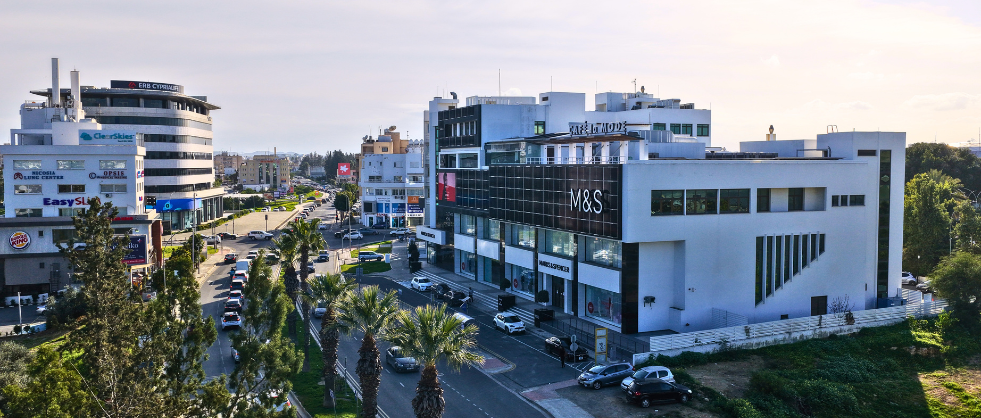
Many businesses still approach photovoltaic systems with one main question: “How much solar can we fit?”
But that is not always the smartest starting point.
A better question is: “How much solar energy can our business actually use, when it has the highest value?”
A commercial roof may have space for a large PV system. But if the business cannot consume enough of that production during the day, and if there is no storage, load management or proper system design, part of the potential value may be lost or reduced.
This is where storage and monitoring become important.
Storage allows a business to move part of its solar production from the hours when it is produced to the hours when it is needed. Monitoring shows whether the system is performing as expected, whether the building is using energy efficiently, and where demand could be shifted.
Without this visibility, a business may believe it has solved its energy problem because it has installed PV.
In reality, it may have solved only part of it.
The fourth thing summer reveals is the difference between savings and resilience
For many sectors, the value of energy is not only financial. Whether in hotels, supermarkets, healthcare, industry or office buildings, energy directly supports business continuity, productivity and customer experience. Summer reveals whether that energy system is working efficiently when demand is at its highest.
In each case, summer shows whether the business has an energy system that actively supports operations, or whether operations are simply absorbing higher energy pressure.
The fifth thing summer reveals is the value of energy data
A business cannot manage energy properly if it only sees consumption once a month.
Real energy intelligence requires live or frequent visibility into:
- when consumption peaks,
- which systems are driving demand,
- how much PV is being produced,
- how much energy is self-consumed,
- how much is exported or unused,
- how batteries charge and discharge,
- whether equipment is underperforming,
- whether night loads are higher than expected,
- whether cooling systems are operating outside normal patterns.
This is where monitoring becomes a management tool, not a technical add-on. Increasingly, that also means AI-driven and predictive analytics: software that learns a building’s normal patterns, flags anomalies before they become expensive, and forecasts tomorrow’s load and solar production so decisions can be made ahead of time rather than after the bill arrives.
The business lesson: energy should be designed as a system
The next stage of business energy strategy in Cyprus is not about isolated technologies.
It is not PV alone.
It is not storage alone.
It is not EV charging alone.
It is not monitoring alone.
It is the way these elements work together around the real behaviour of the business.
The real summer test
Summer is the moment when the business either understands its energy reality or is forced to pay for not understanding it.
The heat will come every year.
The question is whether the business has designed an energy system that can respond intelligently.
The businesses that will lead the next energy cycle in Cyprus will not be the ones that simply install the most equipment. They will be the ones that understand when energy is produced, when it is consumed, when it is wasted, and when it creates value.
Because summer does not create energy problems.
It reveals the businesses that have been managing them, and the ones that have not.
Summer provides the clearest picture of how your business uses energy. An energy assessment based on real operating data can help identify opportunities to reduce costs, improve resilience, and maximise the value of your energy investments. Speak with EnergyIntel to discover what your energy data is telling you.