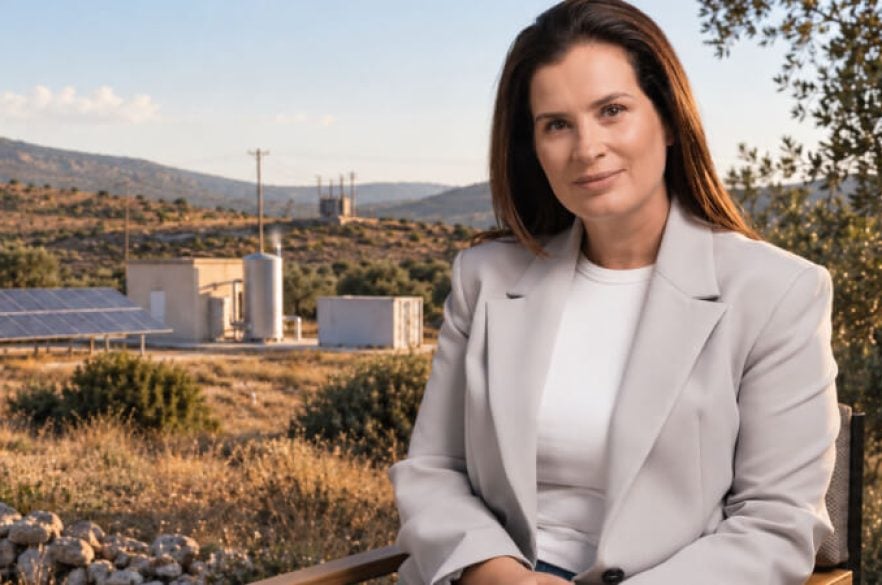

Written by Stylianos Chrysanthou, Head of Project Planning & Management, EnergyIntel

Quick Overview
- A modern home should be designed as an energy system, not simply as a space that consumes electricity.
- Energy planning should begin at the earliest design stage, covering solar PV, battery storage, EV charging and energy monitoring.
- A solar PV system is not a last-minute addition. Its performance depends on the roof, orientation, shading, cabling and available space.
- Battery storage and an EV charger require the right infrastructure, even if they are not installed from day one.
- The true value of a modern home lies in what has been properly anticipated, ensuring it is ready for the energy needs of today and tomorrow.
When designing a new home or undertaking a major renovation, we face many important decisions.
The architecture.
The layout.
The kitchen.
The materials.
The lighting.
The swimming pool.
The outdoor areas.
The garage.
All of these matter. They shape the appearance, functionality and everyday experience of the home.
Yet one critical question is often introduced far too late:
- How will this home operate from an energy perspective?
- How will it produce, consume, store and manage the energy it needs each day?
In our day-to-day work, we frequently encounter homes where the decision to install a solar PV system is made only after construction is well underway, or even after the property has been completed. In most of these cases, additional work is required, including new cabling, spatial modifications or changes to the electrical installation. With proper planning at the design stage, many of these interventions could have been avoided.
The modern home is no longer simply a consumer of electricity.
It is a small energy system and like any system, it needs to be designed properly from the outset.
Good energy planning does more than reduce the cost of future modifications. It also increases the long-term value of the property. In a country such as Cyprus, with abundant sunshine but also high cooling demands, intelligent energy design becomes even more important.
Today’s homes have energy needs that did not exist a few years ago
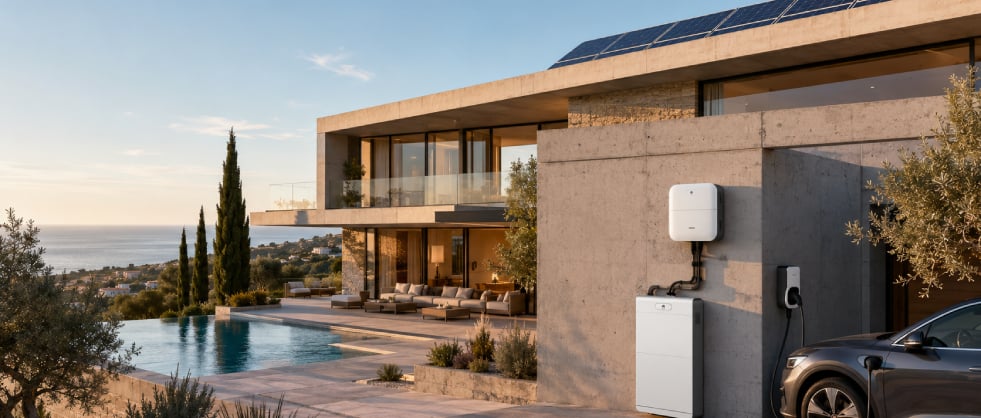
A modern home does not consume energy in the same way as a home built ten or fifteen years ago.
Air-conditioning systems operate for longer hours.
Households use more electrical appliances.
Security systems, automation, pumps, swimming pools and smart-home applications all increase total energy consumption.
At the same time, electric vehicles are gradually becoming part of everyday household life, shifting a portion of what was once “fuel consumption” into the home.
Energy can therefore no longer be treated as a technical issue to be resolved at the end of the project. It must be part of the home’s initial design.
If a property is expected to include a solar PV system, battery storage, an EV charger and an energy monitoring system, these elements should be considered from an early stage.
- Where will the inverter be installed?
- Is there a suitable location for the battery?
- Have adequate ventilation and maintenance access been considered?
- Is there a clear route for the necessary cabling?
- Can an EV charger be added without complex modifications?
- Will the homeowner be able to see how much energy the property produces and consumes?
The correct conduits, cable routes, available capacity within the electrical distribution board and location of the electromechanical equipment should also be determined from the outset. This allows future additions to be completed without disrupting already finished areas of the property.
If no space has been allocated for the inverter or the necessary cabling has not been installed, adding solar PV in the future may require work to walls and finishes, resulting in unnecessary additional costs.
These questions may not be as visually exciting as choosing materials or lighting. Yet they directly affect how efficiently and reliably the home will operate for years to come.
Solar PV should not be an afterthought

Many homeowners begin considering solar PV only after the design has progressed significantly or even after the home has been completed.
By then, however, their options may be more limited.
Roof layout, orientation, shading, available surfaces, cabling and equipment space all influence the system’s performance and ease of installation. When these factors are not considered during the early design stages, compromises may become unavoidable.
The design process should also assess roof pitch, the distances covered by DC and AC cabling, the position of the inverter, maintenance access and the possibility of expanding the system in the future. All of these factors affect both the performance and the overall reliability of the installation.
A solar PV system is not simply “a few panels on the roof”. It is an integral part of the home’s energy operation.
Its value is determined not only by how much energy it produces, but also by how effectively that energy can be used within the home.
Battery storage requires planning even if it is not installed from day one
A battery is often viewed as something that can simply be added at a later stage. In many cases, that is true.
But “later” needs to be planned for “now”.
Battery storage requires a suitable location, safe installation conditions, the correct connection to the inverter and technical compatibility with the rest of the system. It is not just another appliance that can be placed wherever there happens to be room.
Compatibility between the battery and the selected inverter should be evaluated, along with the possibility of expanding storage capacity in the future and ensuring that the system reflects the home’s actual energy needs.
The battery plays an important role: it allows the home to use more of the energy it produces, particularly during the hours when solar generation falls but household consumption rises.
Without the necessary infrastructure in place, installing a battery later may become more complicated, more expensive and less practical.
The electric vehicle is changing how we should think about the home
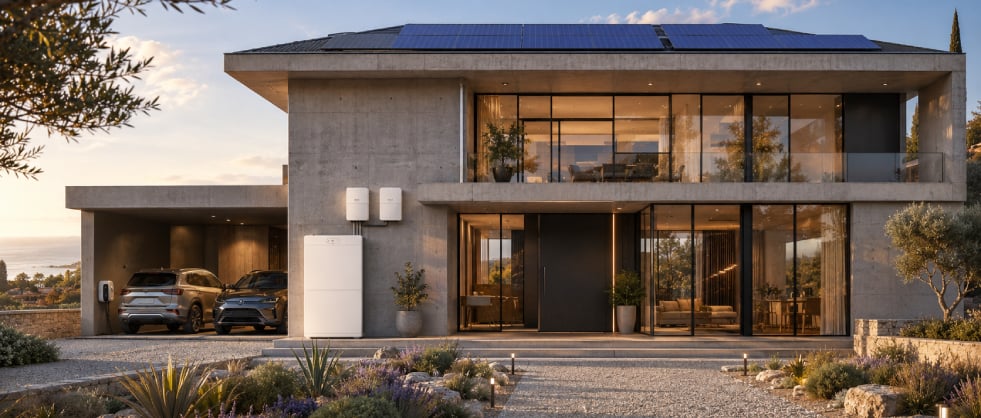
An electric vehicle is not simply a new form of transport.
It also introduces a significant new energy demand within the home.
A residential charger can add a substantial electrical load, particularly when charging takes place frequently or during hours when the property is already consuming more energy. Early planning is therefore essential to determine the required power capacity, charger location, cabling and safety provisions, as well as how EV charging will operate alongside the solar PV system and, potentially, the battery.
In many cases, the home’s available electrical capacity must also be assessed. Provision may be required for a dynamic load-management system, allowing the vehicle to charge without overloading the property’s electrical installation.
Even if the household does not currently own an electric vehicle, a home being designed today should be capable of supporting the needs that are likely to emerge over the coming years.
Monitoring turns energy into knowledge
A home may generate energy without its owner fully understanding what is happening.
- How much energy is being produced?
- How much is being consumed immediately?
- How much is being stored?
- When does consumption increase?
- Which systems use the most energy?
- Where is there room for better management?
Without an energy monitoring system, energy remains something that is mainly visible on the electricity bill.
With effective monitoring, it becomes useful, actionable information.
Continuous monitoring also allows potential faults to be identified early, enables the actual performance of the solar PV system to be assessed and helps optimise energy consumption based on real data rather than assumptions.
This is critical because an intelligent energy strategy is not only about installing equipment.
It is also about understanding how your home operates.
Energy intelligence is part of good design
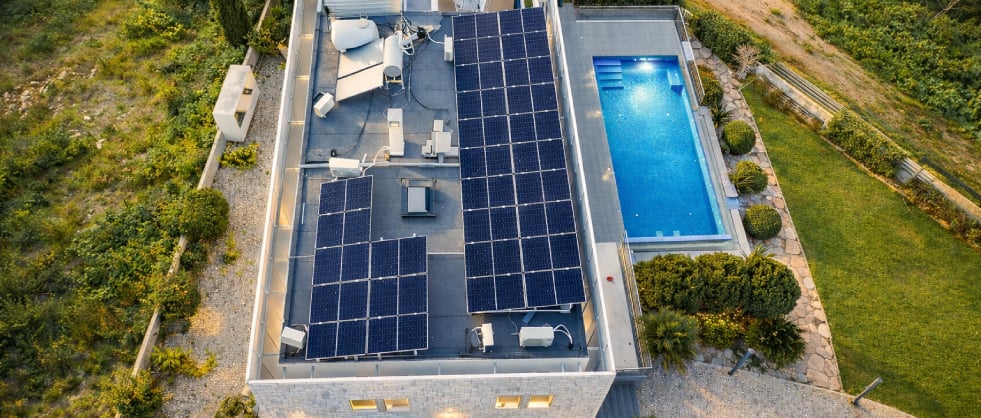
Energy intelligence extends beyond solar PV, batteries and EV chargers. It also includes the overall design of the building, from insulation and shading to efficient electromechanical systems. It begins with the building itself and continues through the selection of the most appropriate energy technologies.
A home can be beautiful, comfortable and carefully designed. But if it has not been planned with energy in mind, it may soon require modifications that could and should have been anticipated during the earliest stages of the project.
This does not mean that every home needs to install every available technology from day one.
It does mean that every home should be ready.
Our experience in the design and delivery of residential projects shows that the best technical decisions are made before construction begins, not after it has been completed. The earlier an energy strategy is integrated into the design process, the more efficient, flexible and future-ready the home will be.
A modern home should be designed to accommodate the technologies that are becoming part of everyday life: solar PV, battery storage, EV charging, energy monitoring and smart energy management.
The true value of a modern home lies not only in what can be seen. It also lies in what has been properly anticipated.
Design your home with an energy strategy from the very beginning.
Talk to EnergyIntel and create a home that is ready for the needs of today and tomorrow.