Written By Eugenia Herodotou, CEO, EnergyIntel
For decades, energy was treated as an operational given.
It was viewed as a necessary cost for households and businesses, relatively predictable and requiring little strategic management.
Today, that approach is not merely outdated. It is dangerous.
Energy has become one of the most volatile and critical economic factors, directly affecting the competitiveness, sustainability and long-term resilience of businesses and households alike.
The Illusion of Stability
The belief that energy was once “stable” is largely misleading.
Stability was never an inherent feature of the energy system. It was the result of structural choices, subsidies and external mechanisms that absorbed much of the underlying risk.
What is changing today is not the nature of that risk, but how it is distributed. A growing share of the risk traditionally absorbed by energy systems and suppliers is now being transferred to the end user.
And its impact is felt in the most immediate way: through cost.
In an environment where prices are shaped by geopolitical developments, energy dependencies and grid constraints, energy is no longer simply an expense.
It has become a variable and unpredictable factor.
From Cost to Risk

The conversation around energy continues to focus primarily on cost.
But the real issue is risk.
When a household or business depends entirely on the energy market, it:
• is exposed to price fluctuations beyond its control;
• is affected by decisions and external factors over which it has no influence;
• carries that uncertainty directly into its day-to-day operations.
In this context, energy becomes a strategic issue, not merely an operational one.
The Need for a New Energy Model
The response to this new reality cannot be fragmented.
It is not only about energy generation. It requires a complete redesign of how we think about and manage energy.
The new model is built on three core pillars:
• Generation: harnessing renewable energy sources;
• Storage: using energy when it delivers the greatest value, not simply when it is generated;
• Smart management: aligning consumption with real needs to maximise performance and reduce costs.
Bringing these elements together creates a new energy framework, one defined not by complete independence, but by greater control.
The Meaning of Energy Ownership
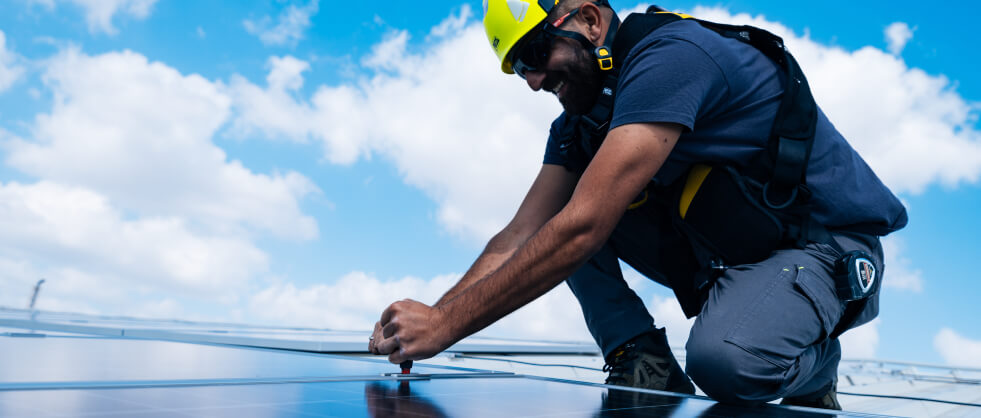
Energy ownership does not mean disconnecting from the grid.
It means having the ability to:
• limit your exposure;
• gain greater control over your costs;
• manage your risk more effectively.
It represents a shift from passive consumption to informed, active management.
That transition is increasingly what separates vulnerability from resilience.
The Energy Transition as a Strategic Choice
The energy transition is often presented as an environmental necessity.
In reality, it is first and foremost an economic and strategic choice.
For countries such as Cyprus, which depend heavily on imported fuels while benefiting from exceptional renewable energy potential, this transition carries even greater significance.
Harnessing solar energy in combination with modern energy storage solutions can transform a structural weakness into a strategic advantage.
The Role of Technology and Energy System Providers

In this new environment, technology creates value only when it forms part of an integrated energy system.
The objective is not simply to install individual technologies. It is to design and manage a comprehensive framework that reduces exposure to risk and increases predictability.
This is the approach behind EnergyIntel’s focus on designing integrated energy systems that combine generation, storage and smart management. The goal is not merely to deliver savings, but to provide meaningful control over energy exposure.
The real point of differentiation lies not in the technology itself, but in how it is designed, integrated and operated as part of a complete system.
Conclusion: From Consumption to Control
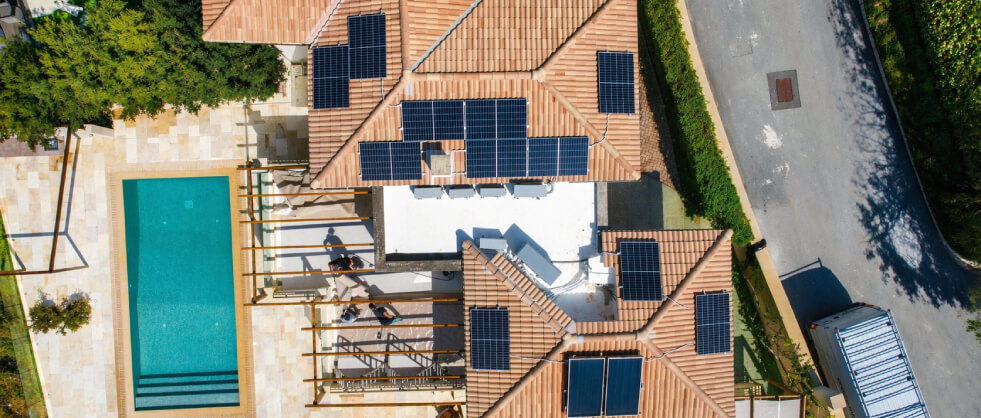
Energy is no longer a passive operating expense.
It is a variable that directly affects:
• stability;
• planning;
• the resilience of every organisation and household.
In this environment, the choice is no longer between cheaper and more expensive energy. It is between exposure and control.
Those who continue to operate according to a model of passive consumption will remain vulnerable to market fluctuations.
Those who invest in an energy management model will gain the ability to anticipate change, adapt to it and take a more active role in shaping their energy costs.
In this new reality, control is not optional. It is a prerequisite for resilience.
Together, we can design the solution that meets your specific needs and help you transform energy from a cost into a strategic advantage.
Contact our specialist team today.