
Written by Marios Alexandrou, COO, EnergyIntel
Whenever a crisis erupts in the Middle East, Cyprus pays the price. Not in theory, but directly—through higher electricity bills, increased operating costs for businesses and greater financial pressure on households. Recent developments in the region, including attacks on energy infrastructure and renewed tensions surrounding oil and natural gas flows, are a stark reminder that energy is not simply a market issue. It is a matter of security, stability and economic resilience.
For Cyprus, the challenge is even more acute because the country remains heavily dependent on imported energy. According to the latest Eurostat data, Cyprus’s energy dependency rate reached 88% in 2024, one of the highest in the European Union. At the same time, petroleum products continue to dominate the country’s energy mix. In other words, Cyprus remains highly vulnerable at precisely the moment when geopolitical instability in its immediate region is intensifying.
This is the great Cypriot paradox: one of Europe’s sunniest countries continues to operate under an energy model that is deeply tied to oil. This is more than an outdated approach. It is a strategic disadvantage. Every episode of international disruption turns dependence on imported fuels into more expensive electricity, greater uncertainty for the market and reduced competitiveness for the economy.

The recent debate surrounding photovoltaics in Cyprus has often become confused. The recent expiry of energy credits from consumers’ electricity accounts was not, in itself, evidence that the system had failed. Net metering rules explicitly provide for surplus credits to be cleared at the end of each 36-month period rather than carried forward into the next one. The incident was therefore largely the result of timing and unfortunate circumstances. Yet because it occurred within an electricity system already under pressure from grid constraints and renewable energy curtailments, it exposed a much deeper problem: Cyprus continues to produce clean energy without having invested sufficiently in energy storage and intelligent energy management.
This is the critical point. The problem is not that Cyprus installed too many photovoltaic systems. The problem is that its energy system has not been modernised at the same pace. The Electricity Authority of Cyprus, through the Distribution System Operator, acknowledges that the curtailment of renewable energy production is necessary to maintain the stable and secure operation of the electricity system. Put simply, when the grid cannot absorb the electricity being generated, renewable production must be restricted. The result is wasted energy, lost economic value and a missed opportunity for the country.
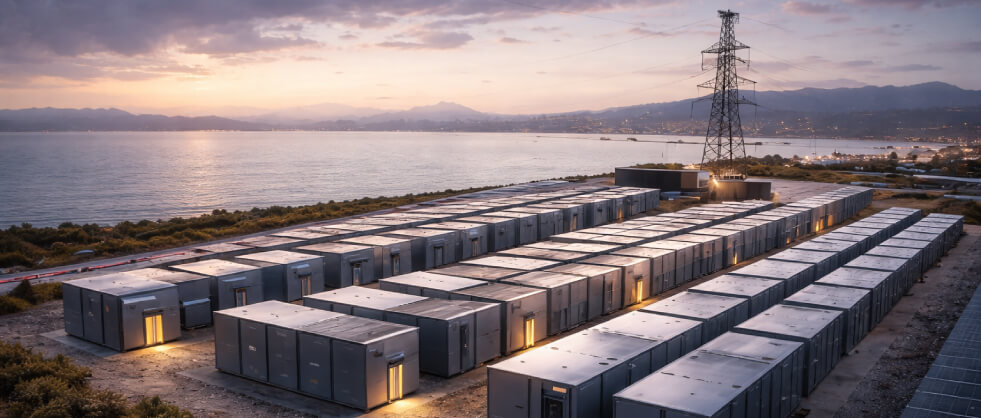
The answer cannot be to slow the growth of solar energy. It must be the exact opposite: a shift from a model based solely on generation to one built around integrated energy management. That means expanding solar generation while simultaneously investing in storage, flexibility and more effective load balancing. The Global Renewables Alliance is now making this case openly, calling on governments to accelerate the deployment of renewable energy, grid infrastructure and energy storage in response to emerging energy crises.
For Cyprus, this translates into something very specific: solar plus storage. Photovoltaics can provide affordable, clean electricity; battery energy storage systems (BESS) can balance supply and demand throughout the day; and longer-duration technologies, such as thermal energy storage, can deliver even greater stability and reliability. The energy transition is no longer solely an environmental issue. It is essential to economic resilience and a fundamental condition for enabling the country to plan for growth without living in fear of the next external shock.
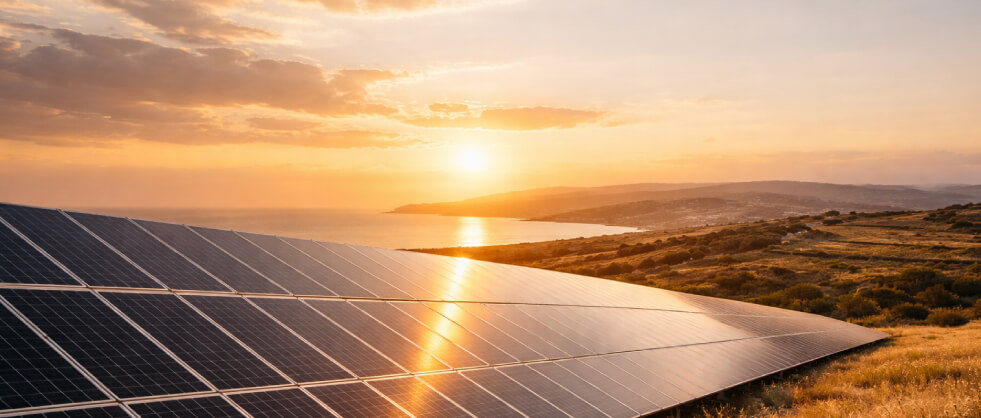
The real question, therefore, is not whether Cyprus should adopt this model. It is why the country is not moving faster. At a time of growing geopolitical uncertainty, dependence on oil is not merely expensive. It is dangerous. And for a country blessed with so much sunshine, delay is not simply an energy policy failure. It is a strategic loss.
Cyprus does not need another theoretical debate about the green transition. It needs an energy system capable of turning the country’s greatest natural resource—its sunshine—into genuine energy security, economic stability and greater national autonomy.